
Support wellbeing with a more specific lens
Choice of focused subjects
You can select stress, perfectionism, anxiety, motivation and related topics.
Grounded in work life
The talks connect wellbeing themes to real workplace pressures and patterns.
Better than one-size advice
A targeted topic often lands more clearly than a single general wellbeing message.
Choose wellbeing topics that match real experience
General wellbeing sessions can miss what work feels like for many neurodivergent people. We provide focused talks on workplace stress, perfectionism, procrastination, the inner critic, anxiety, rejection sensitivity and motivation, so your audience gets a topic with more relevance and detail.
With Neurodiversity Talks, the learning stays grounded in working life rather than drifting into generic wellbeing advice that people cannot easily use.
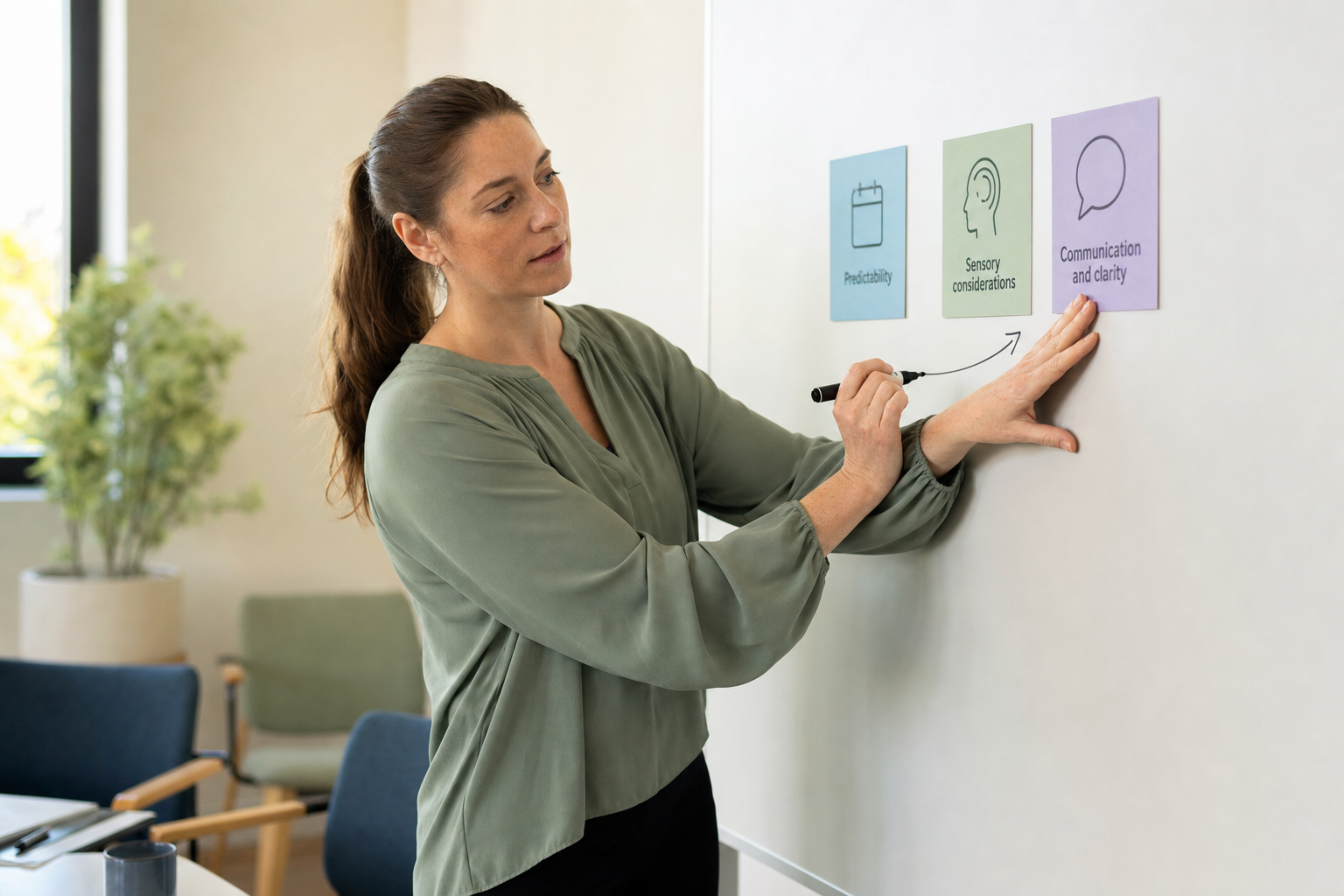
Use a shorter format for targeted awareness
These talks suit employee networks, team sessions and wider awareness events when you need a clear theme and practical discussion. Choosing Neurodiversity Talks means we can match the topic to your audience and keep the tone thoughtful and useful.
In London, some organisations also use selected talks to open informed discussion around workplace stress and herbal-support topics without turning the session into medical advice.
Frequently asked questions
What topics can neurodivergent wellbeing talks cover?
We can focus on workplace stress, perfectionism, procrastination, the inner critic, high-functioning anxiety, rejection sensitivity and motivation. The idea is to choose a topic that feels relevant to your audience rather than treating wellbeing as one broad theme.
Are these talks suitable for awareness events?
Yes. The shorter format works well for employee networks, team sessions and awareness events where you want a focused, thoughtful discussion. We can help match the topic and level of detail to the audience and the time available.
Do the talks give practical takeaways?
Yes. We link each topic to real workplace patterns and supportive habits, so people leave with something they can reflect on or apply. Where herbal-support topics are discussed, we keep the session informational rather than turning it into personal medical advice.