
Make inclusion visible in daily work
Beyond awareness alone
The course focuses on what needs to change across culture, practice and environment.
Design for real differences
We look at overload, concentration and communication in practical workplace terms.
Action framework included
Participants leave with a way to choose and assign meaningful next steps.
Turn awareness into better working conditions
Once people understand neurodiversity, the next question is what your organisation will change. We use this course to look at culture, communication, working practices and the physical or sensory environment through a practical lens.
With Neurodiversity Talks, you can explore how overload is created, how different concentration styles work, and how inclusive design can support interest, fulfilment and steadier day-to-day performance.
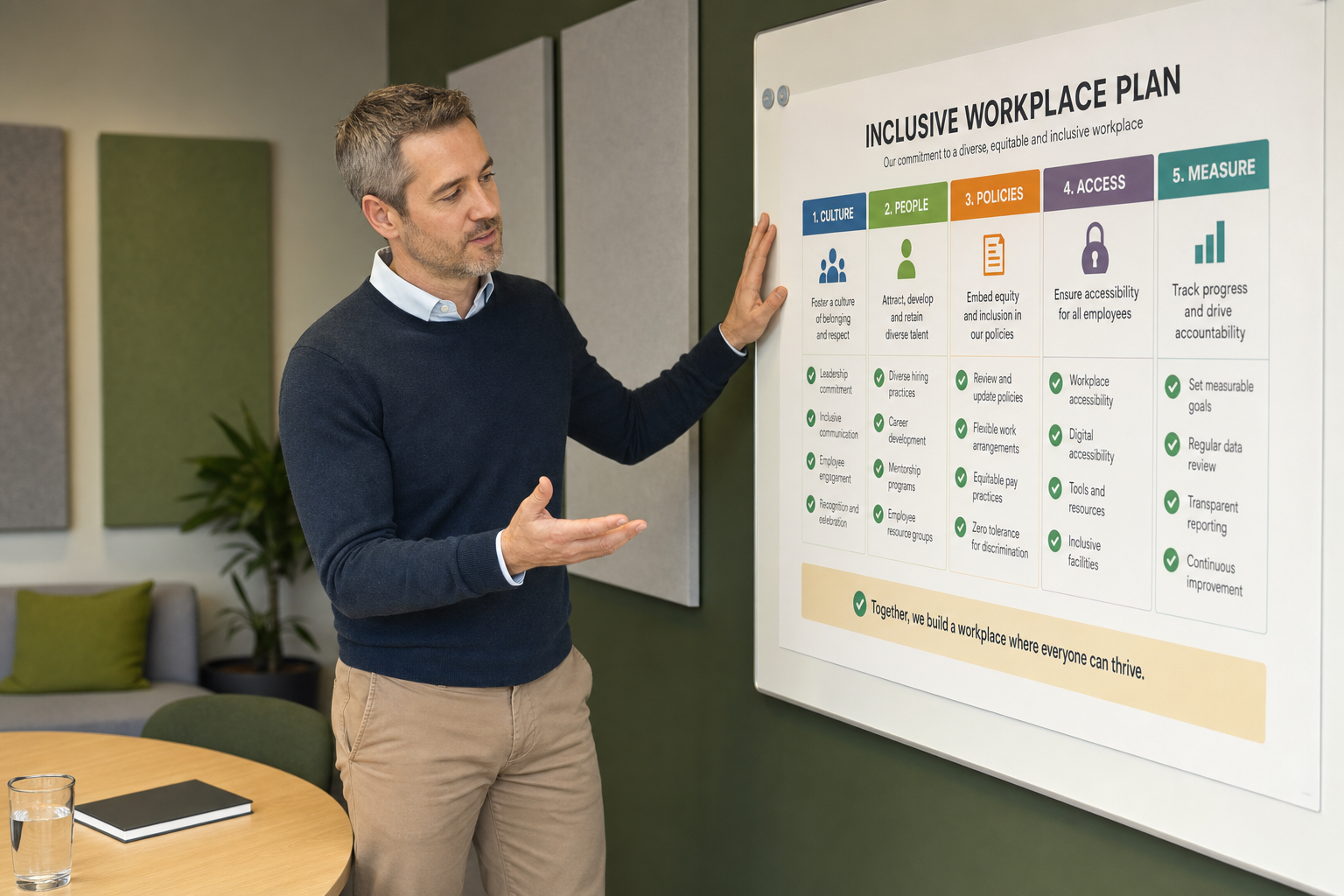

Choose actions your organisation can sustain
This is not about collecting ideas with no owner. Choosing Neurodiversity Talks means we help participants identify barriers, select meaningful actions and think about where responsibility sits across the organisation.
In London, teams use the session to challenge narrow ideas about productivity, review flexibility and build more outcome-focused ways of working that support neurodivergent employees without forcing one model onto everyone.
Frequently asked questions
How is this different from awareness training?
Awareness training builds understanding. This course takes the next step by examining how culture, communication, workload, space and working habits affect neurodivergent employees, then helping your team identify changes that matter in practice.
What kinds of workplace changes does the course explore?
We discuss clearer communication, flexibility, sensory considerations, meeting habits, workload design and other factors that shape everyday work. The focus stays on practical steps your organisation can review, prioritise and own after the session.
Is this suitable for leaders as well as wider teams?
Yes. It works well for leaders, managers, HR and mixed groups because the discussion moves between organisational design and daily practice. If you need role-specific depth, we can also guide you to separate management, recruitment or learning-team training.